


Choosing Software for VR Flight Simulators in Arcades
- Evaluating Software Options for VR Arcade Flight Experiences
- Why the right software matters for your vr flight simulator business
- Core criteria to evaluate before selecting software for a vr flight simulator
- Types of software solutions for arcade vr flight simulator deployments
- Performance, frame-rate and hardware constraints
- Mitigating motion sickness in vr flight simulator arcade rides
- Content lifecycle, updates and safety compliance
- Integrations and arcade operational needs
- Security, privacy and data handling
- Cost models and licensing considerations
- Comparing common software approaches for arcade vr flight simulator
- Vendor selection checklist for vr flight simulator software
- Implementation roadmap and pilot testing
- How VRN0.1 supports arcade operators and why it matters
- Case example: Typical ROI considerations
- Final recommendations
- FAQ — Choosing software for VR flight simulators in arcades
- References
Evaluating Software Options for VR Arcade Flight Experiences
Operating a successful VR arcade ride or flight attraction requires more than eye-catching hardware and motion seats. The software driving a vr flight simulator determines guest satisfaction, throughput, maintenance burden, and return on investment. This article walks arcade operators, venue planners, and investors through the practical, technical, and commercial criteria to choose the right software — based on industry best practices, developer ecosystems, and real operational constraints.
Why the right software matters for your vr flight simulator business
Software is the experience: it defines physics fidelity, visual quality, stability, onboarding speed, health-and-safety safeguards, analytics and revenue features. A mismatch between software and your arcade goals (high throughput vs. hyper-realism, fixed-price rides vs. pay-per-minute) leads to dissatisfied customers, higher churn, and wasted hardware capital.
Core criteria to evaluate before selecting software for a vr flight simulator
Assess each candidate against objective criteria. Embed the primary keyword naturally in conversation with stakeholders; for example: 'How realistic does the vr flight simulator need to feel for our target customers?' Below are the most important dimensions:
- Simulation fidelity and flight model — Does the software simulate aerodynamics, g-load cues and control responsiveness at the level you require? Simulation-grade engines focus on true flight dynamics; arcade titles prioritize fun and accessibility.
- Performance and hardware compatibility — Can it run at consistent 90+ FPS on your target headset and GPU while driving motion platforms or seats?
- Content ecosystem and update pipeline — Is there a library of missions, scenery, and assets? How often are patches and new content released?
- User experience and onboarding — How quickly can a new guest start the experience? Are preflight tutorials integrated?
- Motion-sickness mitigation — Does the software include vignetting, reduced acceleration modes, adjustable comfort settings, or predictive motion smoothing?
- Multiplayer, leaderboards, and social features — If competitive or shared rides are part of your model, does the software support low-latency multiplayer and operator-managed sessions?
- Analytics, remote management and monetization — Does it provide session logs, crash reports, playtime stats, and integration with POS and booking systems?
- Integration with motion hardware and peripherals — Are standard APIs supported (e.g., gamepad, motion platform controllers, haptic systems)? Is middleware required?
- Licensing, source access and customization — Do you need full source license, white-label rights, or is a per-seat SaaS/royalty model acceptable?
- Security, maintenance and vendor support — SLA terms, patch cadence, remote troubleshooting and spare parts availability matter for uptime.
Types of software solutions for arcade vr flight simulator deployments
At a high level, operators choose among four categories. Each suits different business models; the choice influences cost, customization, and time-to-launch.
| Solution type | Typical use | Pros | Cons |
|---|---|---|---|
| Turnkey arcade-ready software | Fast launch, standardized rides | Quick deployment, optimized for throughput, vendor support | Limited customization, recurring licensing |
| Unity/Unreal custom builds | Branded experiences or unique gameplay | High customization, rich visuals, large developer community | Higher dev cost, maintenance responsibility |
| Simulation engines (X-Plane/MSFS) | High-fidelity simulation venues | Very accurate flight physics and real-world scenery | High hardware cost, complex licensing for commercial use |
| Hybrid middleware solutions | Mix of realism and arcade control | Balancing fidelity and performance, modular | Integration complexity, vendor dependency |
Performance, frame-rate and hardware constraints
Consistent frame-rate is non-negotiable in vr flight simulator setups because low or inconsistent frame-rates drive motion sickness and reduce perceived quality. Target a minimum of 72–90 FPS for common headsets (Oculus/Meta, Valve Index). If your ride uses motion platforms, ensure the software can synchronize frame updates with the motion controller loop via a deterministic API or middleware layer. Benchmarks from Unity and Unreal show that optimized scenes with occlusion culling, baked lighting and LOD systems reduce GPU load substantially (see Unity optimization guides).
Mitigating motion sickness in vr flight simulator arcade rides
Motion sickness (VR sickness) is a frequent operational risk. Choose software that includes adjustable comfort modes: reduced field-of-view during fast maneuvers (vignette), fixed cockpit reference frames, limiting rotational acceleration, and implementing predictive latency compensation. Also prioritize onboarding flows that explain motion to guests and give a quick comfort-check option. The Simulator Sickness Questionnaire (SSQ) remains a standard method to quantify symptoms in testing phases; running small-scale pilot tests with representative guests is best practice before full roll-out.
Content lifecycle, updates and safety compliance
Arcades need predictable update cycles and security patches. Ask vendors for a published roadmap, backwards compatibility guarantees, and a change management process for critical safety fixes. If using consumer-focused titles (e.g., Microsoft Flight Simulator), confirm commercial licensing terms — consumer EULAs often prohibit public commercial use.
Integrations and arcade operational needs
Software should integrate with: ticketing/POS systems, queuing displays, remote monitoring dashboards, and payment kiosks. For venues operating multiple units, centralized management that can push content, restart crashed instances, and collect play metrics saves labor and reduces downtime. Confirm the vendor supports remote API access and provides logs in machine-readable formats for analytics.
Security, privacy and data handling
If the software collects user data (leaderboards, profiles, video replays), ensure GDPR and local privacy compliance. Secure remote management interfaces with VPNs and MFA. Ask for a documented vulnerability disclosure policy and incident response SLA.
Cost models and licensing considerations
Common commercial models include:
- One-time perpetual license with optional support contract
- Per-seat or per-machine annual subscription
- Revenue-share or royalty per ride
- OEM/white-label with source access for a High Quality
Calculate total cost of ownership over 3–5 years including support, content updates, potential custom development, and hardware refresh cycles before deciding which model fits your financial goals.
Comparing common software approaches for arcade vr flight simulator
The table below summarizes typical trade-offs. Values are qualitative and should be validated with pilot testing and vendor demos.
| Attribute | Turnkey arcade software | Unity/Unreal custom | Simulation engines (MSFS/X-Plane) |
|---|---|---|---|
| Time to market | Low (weeks) | Medium–High (months) | High (months–year) |
| Customization | Low–Medium | High | Medium |
| Realism | Medium | Medium–High | Very High |
| Operational complexity | Low | Medium–High | High |
| Cost | Moderate | High (dev costs) | High (hardware + licensing) |
Vendor selection checklist for vr flight simulator software
When you shortlist vendors, use this checklist during demos and RFP evaluation:
- Can you provide an SLA and uptime history from live sites?
- Do you support motion-platform synchronization and which protocols are supported?
- What comfort/anti-sickness features are built-in? Can settings be locked by operators?
- What telemetry and reporting comes out-of-the-box? Is there a REST API?
- What are licensing terms for commercial/public entertainment use?
- What’s the update cadence and policy for emergency patches?
- Can the software run offline or does it require persistent cloud connectivity?
- Do you provide training and on-site commissioning? What are the costs?
Implementation roadmap and pilot testing
A recommended implementation roadmap for first-time arcade installations:
- Define business goals: throughput, price point, target demographics.
- Technical pilot: run the software on identical hardware for a week with internal testers and representative guests.
- Measure: FPS, motion platform sync, SSQ results, average session time, onboarding time.
- Refine: adjust comfort settings, menus and operator flows.
- Operationalize: integrate POS, signage and remote monitoring; train staff.
How VRN0.1 supports arcade operators and why it matters
VRN0.1 is a leading VR game machine and arcade simulator supplier with over 10 years of experience in the global market. Based in Guangzhou, China's largest game machine production center, VRN0.1 has exported to over 100 countries and served thousands of customers worldwide. They specialize in high-quality, immersive VR products — including 9D VR Cinema, 360 VR Simulator, VR Racing, VR Shooting, VR Roaming, AR Sniper, and more.
Why VRN0.1 stands out when selecting software and integrated solutions for a vr flight simulator:
- One-stop venue solutions: VRN0.1 offers OEM and ODM services plus free training for equipment and operations, minimizing time-to-opening.
- Extensive product line: Their portfolio covers mainstream arcade categories — VR Simulator, Arcade game simulator, VR car driving simulator, Interactive Platform VR, Racing Game Machine, AR Sniper, Kiddie Ride, 7D Cinema — allowing cross-promotion and flexible venue planning.
- R&D and quality control: A strong R&D team and strict QA processes ensure software and hardware compatibility and longevity.
- After-sales and global support: 24/7 customer support, remote diagnostics and spare-parts supply chain reduce downtime.
- Customizable and scalable: They tailor venue planning, equipment configuration, and operational strategies to meet different budgets and market targets.
For operators who want a proven partner for vr flight simulator attractions, VRN0.1’s experience in both hardware and software integration reduces risk and accelerates ROI. Explore their offerings and contact their team at https://www.vrarcadegame.com/.
Case example: Typical ROI considerations
Sample conservative projection (illustrative) for a single-machine vr flight simulator with mixed-ticket pricing:
| Metric | Value (monthly) |
|---|---|
| Sessions per day | 60 |
| Average ticket price | $8 |
| Monthly revenue | $14,400 |
| Estimated operating costs | $4,000 (staff, utilities, maintenance) |
| Monthly net (before capex amortization) | $10,400 |
Adjust variables (throughput, price, local costs) to model your own payback period. Software choice affects both throughput (onboarding time) and maintenance costs — choose accordingly.
Final recommendations
Start with a clear definition of your guest profile and business goals. If you need fast deployment and predictable uptime, a turnkey arcade software partner or a vendor like VRN0.1 that supplies integrated hardware+software and operations support reduces risk. If you require branded, deeply-customized experiences and have development resources, a Unity or Unreal custom build may pay off in differentiation.
Always run a pilot on your target hardware, measure comfort and throughput, and ensure the vendor provides clear licensing and support SLAs. Prioritize software that supports operator locking of comfort settings, remote management APIs and reliable telemetry for continuous improvement.
FAQ — Choosing software for VR flight simulators in arcades
- Q: What frame-rate do I need for a vr flight simulator?
A: Aim for 72–90+ FPS depending on the headset and motion system. Higher and more stable frame-rates reduce motion sickness and improve perceived quality.
- Q: Can I use consumer flight simulation software in a commercial arcade?
A: Not automatically. Consumer EULAs often restrict commercial public usage. Confirm licensing with the software vendor before deployment.
- Q: How do I reduce motion sickness for first-time guests?
A: Use built-in comfort modes (vignetting, slower rotations), provide a short orientation, and give guests the option to select a comfort level before the ride.
- Q: Should I choose a turnkey software or custom build?
A: Turnkey solutions are faster and operationally simpler; custom builds provide differentiation but cost more and require ongoing maintenance.
- Q: What integrations are essential for arcade operations?
A: POS/ticketing, remote monitoring, queuing displays, and payroll scheduling. Also ensure telemetry export for business analytics.
- Q: How important is vendor support?
A: Critical. Look for SLAs, remote diagnostics, and local spare part availability to minimize downtime and revenue loss.
Want help choosing or deploying a vr flight simulator solution? Contact VRN0.1 to discuss tailored venue planning, equipment configuration, and operational strategies. View products and request a consultation at https://www.vrarcadegame.com/.
References
- Unity Learn and Optimization Guides — Unity Technologies, accessed 2025-11-20, https://learn.unity.com/
- Unreal Engine VR Documentation — Epic Games, accessed 2025-11-20, https://docs.unrealengine.com/
- Steam Hardware & Software Survey — Valve, accessed 2025-11-20, https://store.steampowered.com/hwsurvey/
- XR Association (XRA) Industry and Consumer Reports — XR Association, accessed 2025-11-20, https://xra.org/
- Simulator Sickness Questionnaire (SSQ) — R.S. Kennedy et al., 1993 (standard assessment used in VR research), DOI: 10.1037/0278-7393.19.4.689, accessed 2025-11-20
- VRN0.1 company website and product information — VRN0.1, accessed 2025-11-20, https://www.vrarcadegame.com/
Everything You Need to Know About arcade simulation games
VR Shooting Simulator ROI: Metrics for Arcade Owners
Everything You Need to Know About simulator shooting game machines
VR Shooting Simulator ROI: Profitability and Pricing Models
Distributors
What are the unique features of VRNO.1's products?
VRNO.1's VR equipment uses the latest technology to provide excellent immersion and interactivity. Our equipment is uniquely designed to meet global market needs and undergoes strict quality control to ensure long-term reliability of each device.
What is the warranty policy for VRNO.1 products?
All VRNO.1 equipment enjoys a certain period of warranty service, which depends on the product type and cooperation agreement. During the warranty period, if the equipment fails, we will provide free repair or replacement service.
If I encounter problems using the product, how can I seek help?
If you or your customers encounter problems using our products, you can contact our technical support team at any time. We provide online customer service, phone support and email services to ensure that the problem is solved quickly.
Application
Is the VR device suitable for all family members?
Yes, VRNO.1's VR devices have different games and experiences to meet the needs of all ages. Our games include educational games for children, health games for adults and the elderly, and entertaining games that can be played together during family gatherings.
Solution
How to install and debug VRNO.1's VR equipment?
We provide professional installation and debugging services. After the equipment arrives at your venue, our technical team will send personnel to the site to install the equipment and ensure that all equipment and software functions can operate normally. After the installation is completed, we will also train your operators.
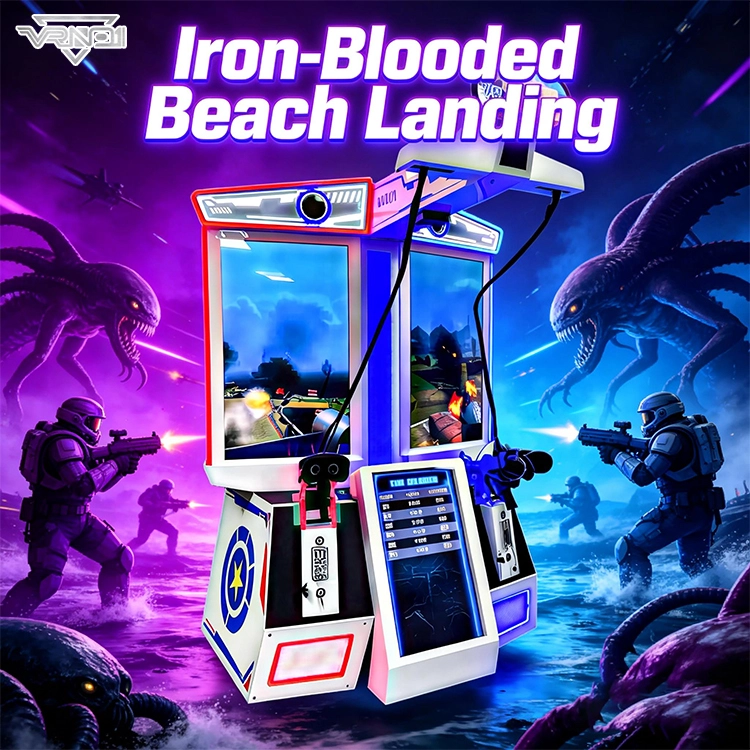
VRN0.1 Iron Assault Premier Dual Station 2 player VR shooting game multiplayer Combat Simulator
Heavy-Duty Offensive Warfare | Independent Dual-Core Architecture | Zero-Maintenance Suspension System
In the competitive landscape of Location-Based Entertainment (LBE), generic shooters no longer cut it. Enter the VR NO.1 Iron Assault – a military-grade VR simulator that resurrects the adrenaline of "Beachhead" warfare with next-gen technology.
Engineered by VR NO.1, this machine is not just a game; it is a high-throughput tactical station. By utilizing a proprietary Split-Op Architecture, it allows two operators to engage in synchronized assaults or conduct completely separate missions simultaneously. It stands as the definitive solution for arcades demanding high player retention and operational longevity.
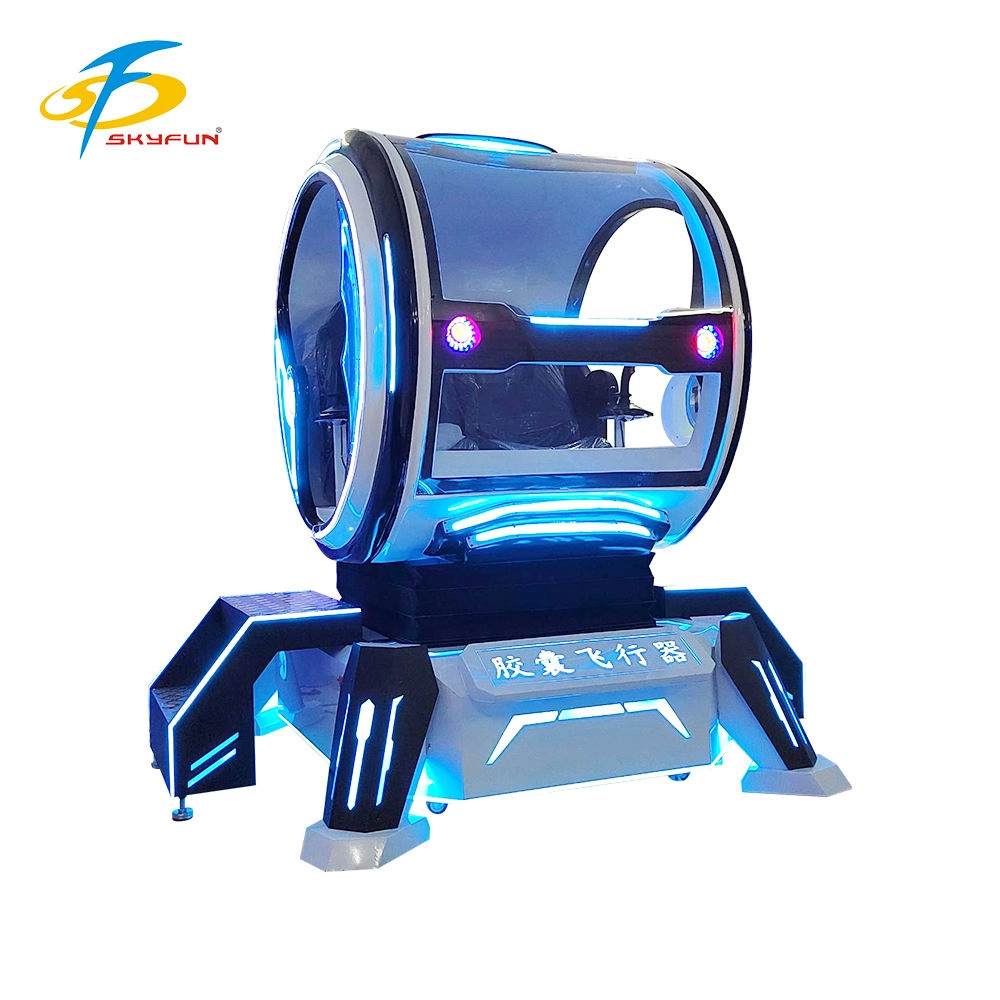
Double Player VR Flight Simulator 100 Movies 15 Games Coin-Operated Game Machine for Shopping Malls Amusement Parks
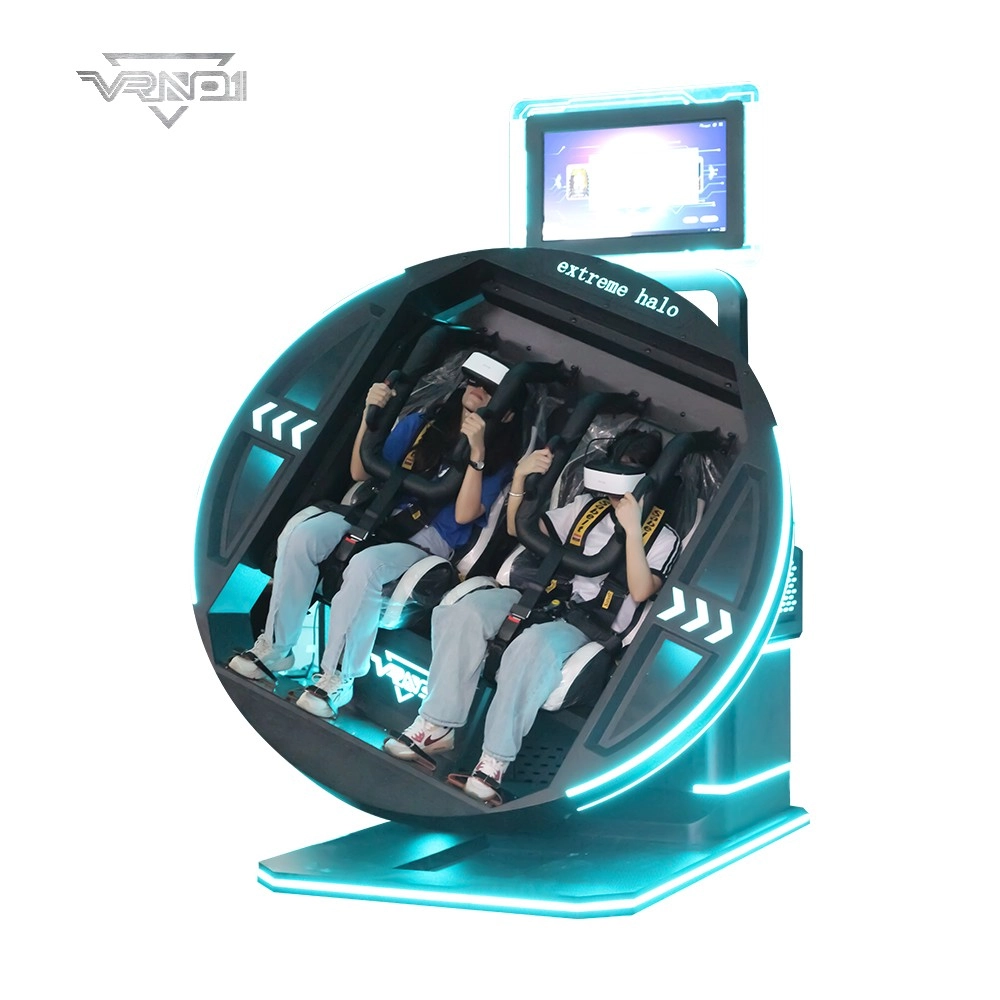
9D VR 360 Roller Coaster Cinema Chair Gaming Set Indoor/Outdoor Business Simulator Hardware for Home or School
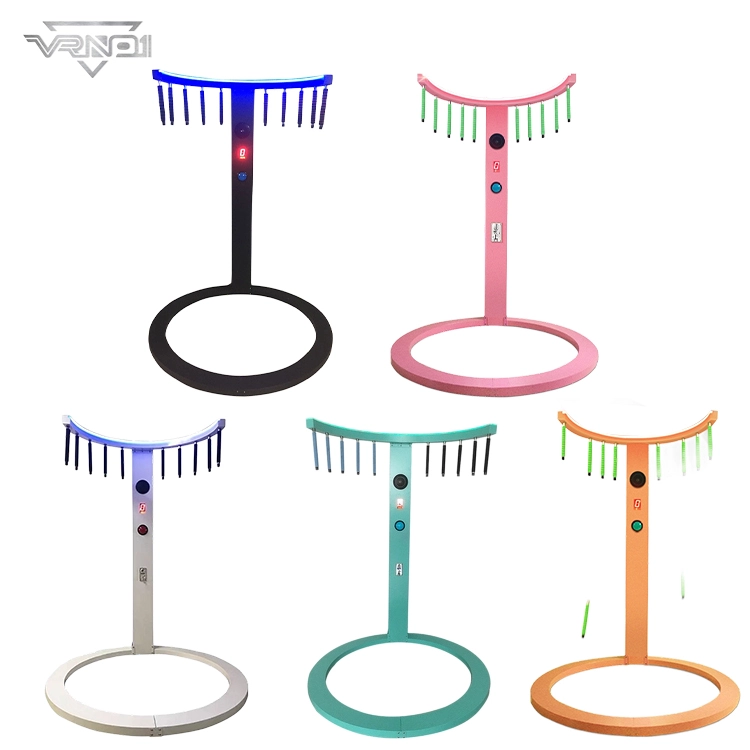
VRN0.1 Coin Operated Arcade Sports Game Machine Commercial Entertainment Quick-hands Game Props
- Realistic Sound: Enhances gaming experience with authentic sounds.
- Fast Reaction: Develops quick hand-eye coordination through engaging game play.
- DIY Kit: Allows for customization and personalization of the baton.
- Metal and Plastic Construction: Durable and robust build quality.
- Coin Operated: Fun for players who enjoy arcade-like experiences.
 Scan QR Code
Whatsapp: +8618127818571
Scan QR Code
Guangzhou Skyfun Technology Co.,Ltd
skyfunvrgame
skyfun game