

How to Choose a Reliable VR Simulators Manufacturer
- Selecting the Right Partner for Immersive Entertainment
- Understand your business goals and use cases
- Define budget, pricing model, and expected ROI
- Evaluating Technical Capabilities and Product Quality
- Hardware durability and component sourcing
- Software architecture, content library, and update policy
- Safety certifications and compliance
- Assessing Manufacturer Reliability and Production Capacity
- Experience, references, and installed base
- Production lead times, scalability, and custom orders
- Quality control and testing procedures
- Commercial, Operational and After-sales Support
- Warranty, spare parts, and repair logistics
- Training, venue planning, and operational consultancy
- OEM/ODM flexibility and software licensing models
- Making the Final Selection: Commercial Terms and Risk Management
- Comparing total cost of ownership (TCO)
- Contract terms, deposit, and inspection clauses
- Pilots, prototypes and phased rollouts
- Why VRN0.1 Can Be a Strong Candidate for Your VR Simulators Machine Needs
- Company overview and global track record
- Product breadth, OEM/ODM and one-stop services
- Technical capabilities, R&D and after-sales support
- Checklist: Questions to Ask Any VR Simulators Machine Manufacturer
- Pre-sales technical and commercial checklist
- Operational checklist
- FAQ — Frequently Asked Questions
- 1. How do I verify that a VR Simulators machine is safe for public use?
- 2. What is a reasonable warranty and support expectation?
- 3. Should I buy locally or import from China?
- 4. How important is content variety for long-term revenue?
- 5. What common mistakes do new operators make?
- 6. Can I brand or customize machines for my venue?
- Next Steps and Contact / Product Inquiry
- References
Selecting the Right Partner for Immersive Entertainment
Understand your business goals and use cases
Before evaluating any manufacturer, clarify what you want the VR Simulators machine to achieve. Are you building a high-throughput arcade, a family entertainment center (FEC), a shopping mall attraction, a theme-park ride, or a location-based entertainment (LBE) experience? The intended use affects seat count, footprint, content type (racing, shooting, roaming, kiddie ride), durability expectations, and average session length—each drives different technical and commercial requirements.
Define budget, pricing model, and expected ROI
Estimate total project cost: equipment purchase price, shipping, customs, installation, local modifications, software licensing, maintenance, staff training, and marketing. Compare CAPEX and OPEX scenarios: a cheaper unit with high maintenance may be more expensive over 3–5 years than a higher-quality machine with lower downtime. Use conservative revenue assumptions (foot traffic, ticket price, daily sessions) to calculate payback period and ROI.
Evaluating Technical Capabilities and Product Quality
Hardware durability and component sourcing
Inspect build materials, frame strength, motion systems, seatbelts/restraints, motors, and wiring. Ask for component datasheets and supplier lists for critical parts (motors, actuators, suspension, HMD brands). Verify whether the manufacturer uses industrial-grade components or consumer-grade parts; industrial components typically yield longer MTBF (mean time between failures).
Software architecture, content library, and update policy
Confirm whether software is proprietary or third-party, how content is licensed, and how frequently content updates are delivered. A strong manufacturer provides modular software with remote update capability, a content roadmap, and a content management system (CMS) for scheduling and analytics. Request demo access to the back-end platform.
Safety certifications and compliance
Demand copies of relevant certifications: CE, FCC, RoHS, ISO 9001 (quality management), and any local certifications required by your jurisdiction. For ride-based simulators, ask for compliance with amusement-ride safety standards where applicable. Safety documentation, wiring diagrams, and emergency stop procedures should be supplied.
Assessing Manufacturer Reliability and Production Capacity
Experience, references, and installed base
Ask for case studies, client references, and site visit opportunities. A manufacturer with a verifiable global installed base reduces your execution risk. Check online reviews, customer testimonials, and request contact details of operators in similar markets.
Production lead times, scalability, and custom orders
Confirm manufacturing lead times, MOQ (minimum order quantity), and the ability to scale production for multi-location rollouts. For customized theming or OEM/ODM work, request prototype timelines and approval stages to avoid delays during mass production.
Quality control and testing procedures
Good manufacturers provide documented QC procedures: incoming inspection, in-line testing, factory acceptance testing (FAT), burn-in tests, and pre-shipment checks. Ask to witness FAT or receive detailed test reports (uptime, vibration tolerances, safety interlock validation).
Commercial, Operational and After-sales Support
Warranty, spare parts, and repair logistics
Negotiate warranty length and coverage (parts, labor, travel). Confirm spare-part lead times and whether local warehouses or authorized distributors exist. A clear SLA for response time (e.g., 24/7 remote support, on-site technician within X days) is essential for attractions where downtime directly reduces revenue.
Training, venue planning, and operational consultancy
Top-tier suppliers offer venue planning (flow, queueing, power, and floorplan), staff training, marketing materials, and operational playbooks. These services shorten time-to-profit and reduce common operational errors. Verify whether training is included for free or available for a fee.
OEM/ODM flexibility and software licensing models
If you need branded cabinets or exclusive software builds, check the supplier's OEM/ODM track record. Clarify software license models: perpetual license, per-seat subscription, revenue share, or content-as-a-service. Hidden licensing costs can materially alter project economics.
Making the Final Selection: Commercial Terms and Risk Management
Comparing total cost of ownership (TCO)
Build a side-by-side TCO matrix across competing vendors including purchase price, shipping, customs, installation, training costs, spare parts, expected annual maintenance, energy consumption, and anticipated downtime. Below is an example comparison framework you can adapt:
| Criteria | Vendor A | Vendor B | VRN0.1 (example) |
|---|---|---|---|
| Initial unit price (USD) | $15,000 | $12,500 | $13,500 |
| Annual maintenance (% of price) | 8% | 12% | 7% |
| Average downtime (days/year) | 12 | 20 | 6 |
| Warranty (months) | 12 | 24 | 24 |
| Local spare parts availability | Limited | Good | Global support (100+ countries) |
Note: Figures above are illustrative. Ask each supplier for real quotes and service-level commitments to fill this matrix accurately.
Contract terms, deposit, and inspection clauses
Include contract clauses for delivery schedule, penalties for delays, inspection rights, FAT acceptance criteria, IP ownership for custom software, and clear warranty/service clauses. Hold a small portion of payment until successful acceptance testing in your venue.
Pilots, prototypes and phased rollouts
Whenever possible, run a pilot of 1–3 units to validate demand, operations, and technical reliability before committing to a full rollout. Pilots reveal hidden costs such as staffing needs, queue management, and content preferences specific to your market.
Why VRN0.1 Can Be a Strong Candidate for Your VR Simulators Machine Needs
Company overview and global track record
VRN0.1 is a leading VR game machine and arcade simulator supplier with over 10 years in the global market. Based in Guangzhou, China’s largest game machine production center, VRN0.1 has exported to more than 100 countries and served thousands of customers worldwide. This scale suggests mature production processes and international logistics experience.
Product breadth, OEM/ODM and one-stop services
VRN0.1’s product lineup covers mainstream VR arcade categories, including 9D VR Cinema, 360 VR Simulator, VR Racing, VR Shooting, VR Roaming, AR Sniper, Kiddie Ride, and 7D Cinema. The company provides OEM and ODM services, one-stop venue solutions, and free training on equipment and operation—services that reduce friction for new venues and multi-site operators.
Technical capabilities, R&D and after-sales support
VRN0.1 emphasizes a strong R&D team, strict quality control, and 24/7 customer support. Their offering includes tailored venue planning, equipment configuration, and operational strategies to meet different budgets. These capabilities reduce execution risk and help optimize CAPEX-to-revenue performance. For details and product inquiries, visit: https://www.vrarcadegame.com/.
| VRN0.1 Strength | Why it matters |
|---|---|
| 10+ years export experience | Proven logistics and documentation for customs, lowers delivery risk |
| Wide product range | Allows multi-attraction venues to source from a single supplier |
| Free training & operational support | Faster ramp-up and higher first-year uptime |
| OEM/ODM capability | Custom branding and exclusive builds for competitive differentiation |
Checklist: Questions to Ask Any VR Simulators Machine Manufacturer
Pre-sales technical and commercial checklist
- Can you provide technical datasheets, wiring diagrams, and BOM for major components?
- What certifications do you hold (CE, FCC, RoHS, ISO 9001)?
- What is your average lead time and MOQ for new orders?
- Do you offer FAT and accept on-site acceptance testing?
- What is included in warranty and response time for on-site service?
Operational checklist
- Do you provide venue layout assistance and recommended power/wiring plans?
- Are operator training and marketing materials included?
- How do software updates and new content deliveries work?
- Do you provide reporting/analytics for usage, revenue, and fault logs?
FAQ — Frequently Asked Questions
1. How do I verify that a VR Simulators machine is safe for public use?
Request safety certificates (CE, local amusement authority approvals if applicable), wiring diagrams, emergency stop tests, and test reports. Insist on factory acceptance testing and a documented user maintenance schedule.
2. What is a reasonable warranty and support expectation?
A typical standard warranty is 12–24 months. For commercial attractions, aim for 24 months plus a clear SLA for spare parts and on-site support (e.g., remote troubleshooting within hours, on-site technician within X days depending on region).
3. Should I buy locally or import from China?
Importing from established Chinese manufacturers can reduce unit cost and provide broader product choice; however, ensure the supplier has reliable international logistics, documented QC, and local support partners or spare-part warehouses to minimize downtime costs.
4. How important is content variety for long-term revenue?
Very important. Fresh content and variety increase repeat visits. Prefer suppliers offering content management systems, regular updates, and options for custom or exclusive content to maintain audience interest.
5. What common mistakes do new operators make?
Common mistakes include underestimating maintenance costs, ignoring queue management and throughput planning, selecting equipment without adequate training, and failing to budget for spare parts and software licensing.
6. Can I brand or customize machines for my venue?
Yes—many manufacturers offer OEM/ODM services for cabinet skin, themed wraps, and exclusive software. Clarify IP ownership, lead time for custom tooling, and minimum quantities early in negotiations.
Next Steps and Contact / Product Inquiry
If you are evaluating suppliers, compile answers to the checklist and request a formal proposal with FAT terms, a TCO breakdown, and reference installations. For operators seeking a reliable partner, VRN0.1 offers extensive product lines (VR Simulator, Arcade game simulator, VR car driving simulator, Interactive Platform VR, Racing Game Machine, AR Sniper, Kiddie Ride, 7D Cinema) plus OEM/ODM and global support. Learn more or request a quote at https://www.vrarcadegame.com/.
References
- Grand View Research — Virtual Reality Market Size, Share & Trends Analysis Report. https://www.grandviewresearch.com/industry-analysis/virtual-reality-vr-market (accessed 2026-01-07)
- Statista — Virtual Reality (VR) market worldwide revenue 2016-2026. https://www.statista.com/statistics/591181/global-virtual-reality-market-size/ (accessed 2026-01-07)
- Wikipedia — Virtual reality. https://en.wikipedia.org/wiki/Virtual_reality (accessed 2026-01-07)
- ISO — Quality management systems (ISO 9001). https://www.iso.org/iso-9001-quality-management. (accessed 2026-01-07)
- VRN0.1 — Official website. https://www.vrarcadegame.com/ (accessed 2026-01-07)
Running VR Arcade Tournaments and Events
How to Choose the dancing game machine manufacturer and supplier ?
Best vr spaceship manufacturers and supplier brands in us
Best VR Flight Simulators for Arcades in 2026
Products
How does VRNO.1’s VR technology work?
Our VR systems use advanced headsets, motion tracking, and interactive controls to create an immersive, 360-degree experience. Players can engage with digital environments in real time, simulating real-world and fantastical scenarios.
Solution
How to customize VR equipment and content for my venue?
VRNO.1 provides personalized customization services. You can choose different VR equipment and game content according to the type of venue, customer group and budget requirements. Our design team will communicate with you to ensure the best solution and design the venue layout.
Home
Are your VR systems suitable for commercial use?
Yes, our VR arcade solutions are designed for commercial use, ideal for arcades, gaming centers, shopping malls, and entertainment venues. We offer both standalone machines and multi-player setups.
Can I customize the VR experience for my business?
Yes, we offer tailored VR experiences to suit your business needs, from custom content to specific hardware configurations, ensuring the best possible experience for your customers.
Distributors
How to become a VRNO.1 dealer?
You can start the application by visiting our website and filling out the dealer application form. Our team will evaluate your application upon receipt and contact you for further communication.
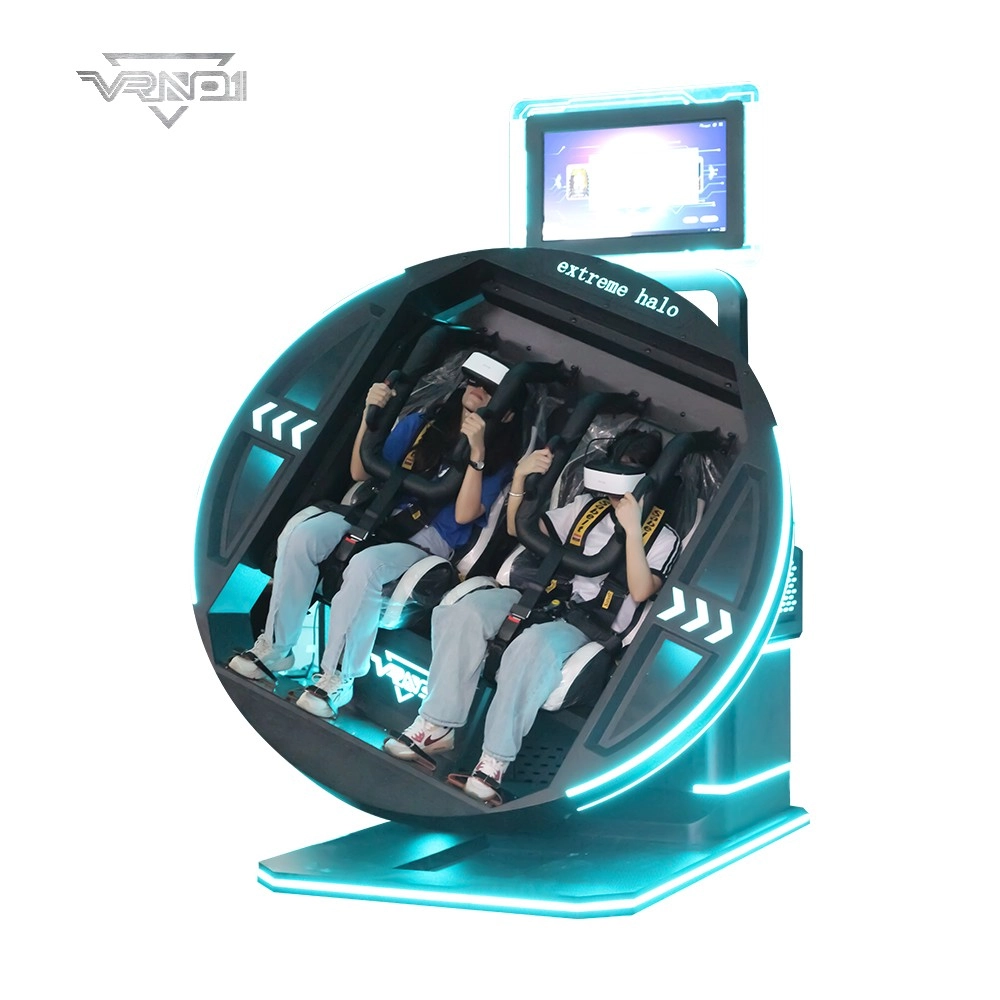
9D VR 360 Roller Coaster Cinema Chair Gaming Set Indoor/Outdoor Business Simulator Hardware for Home or School
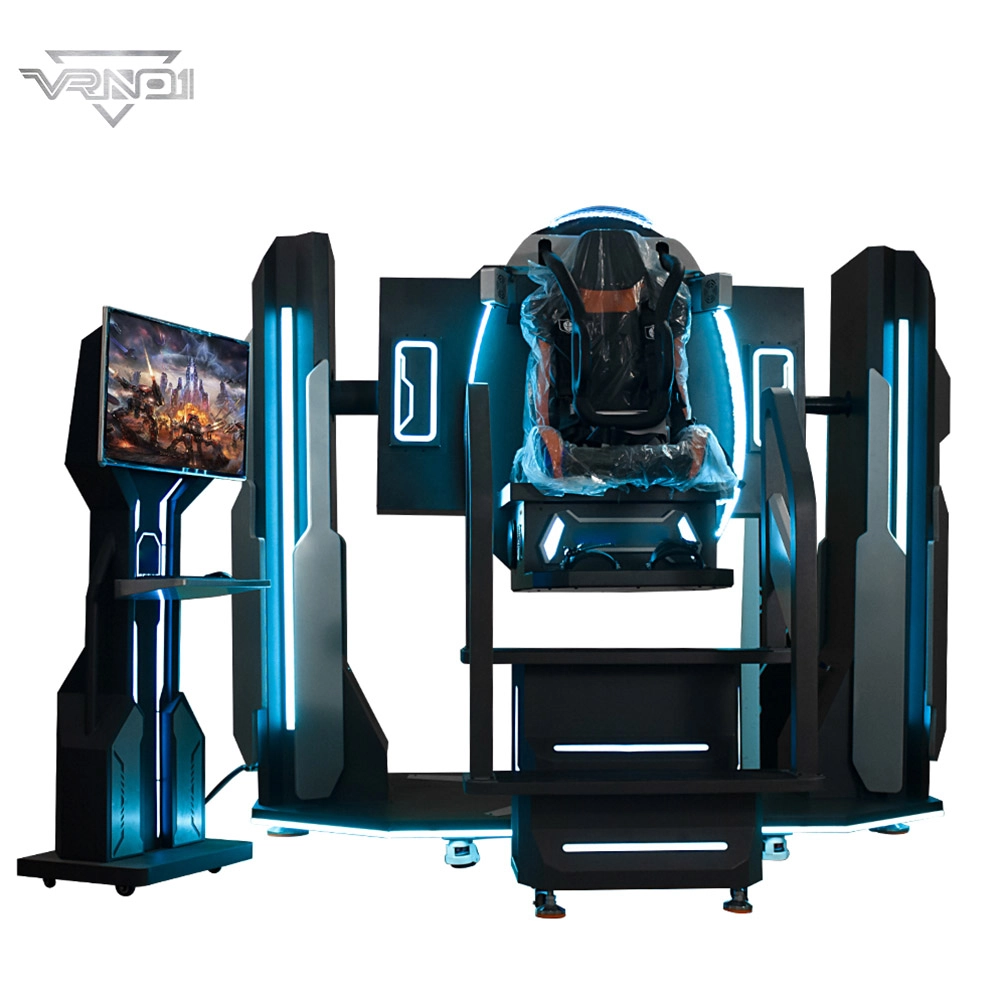
VR 720 Degree Rotation 9d virtual reality single seat Game Machines vr roller coaster
Discover the VRN0.1 VR 720 Degree Rotation 9D Virtual Reality Single Seat Game Machine! Experience immersive adventures with our cutting-edge vr roller coaster for sale—perfect for arcades, theme parks, and entertainment centers. Boost your venue with high-impact fun!
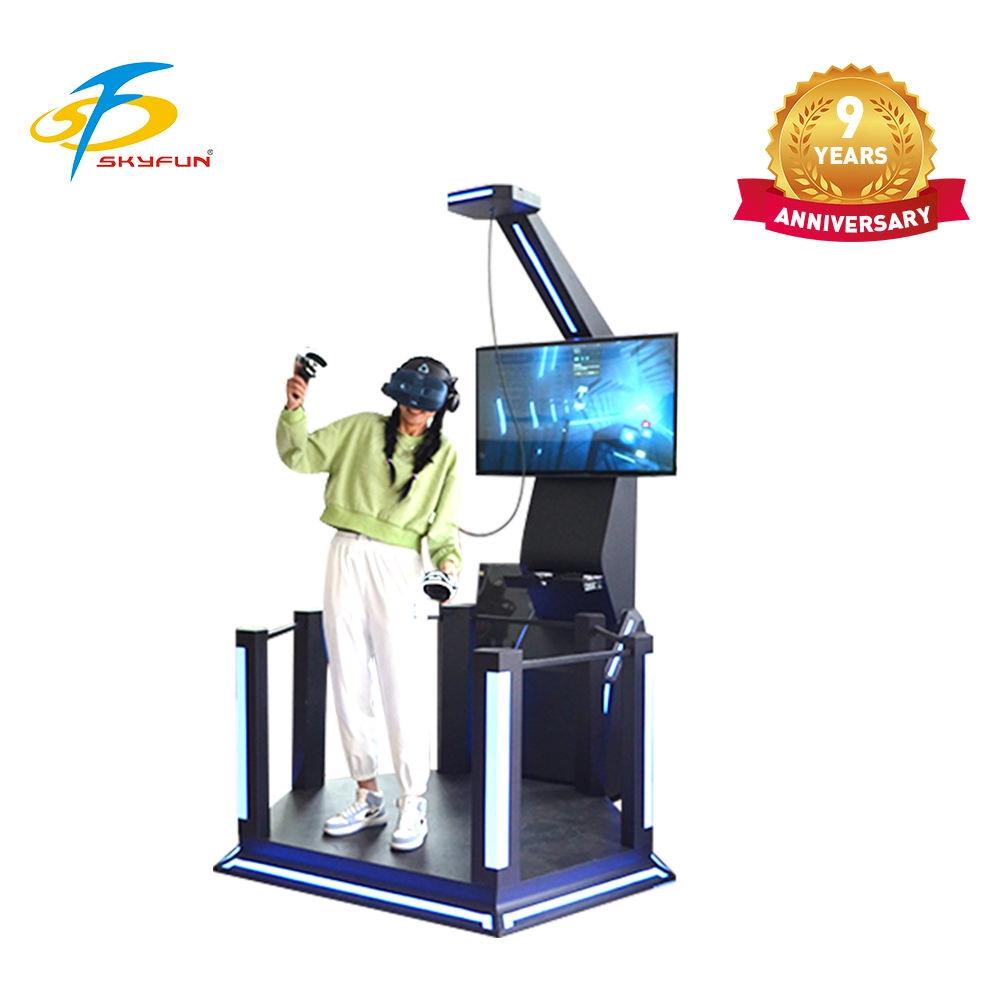
VRN0.1 VR Shooting HTC Adventure Park VR Game Public VR Game Simulator Airport VR Game Simulator
Our VR Gaming Equipment represents the pinnacle of interactive entertainment technology. This comprehensive system includes Mini HTC VR capabilities optimized for high-intensity gaming experiences, particularly boxing games and action simulations. The equipment is engineered for commercial deployment with emphasis on durability, user safety, and operational efficiency.
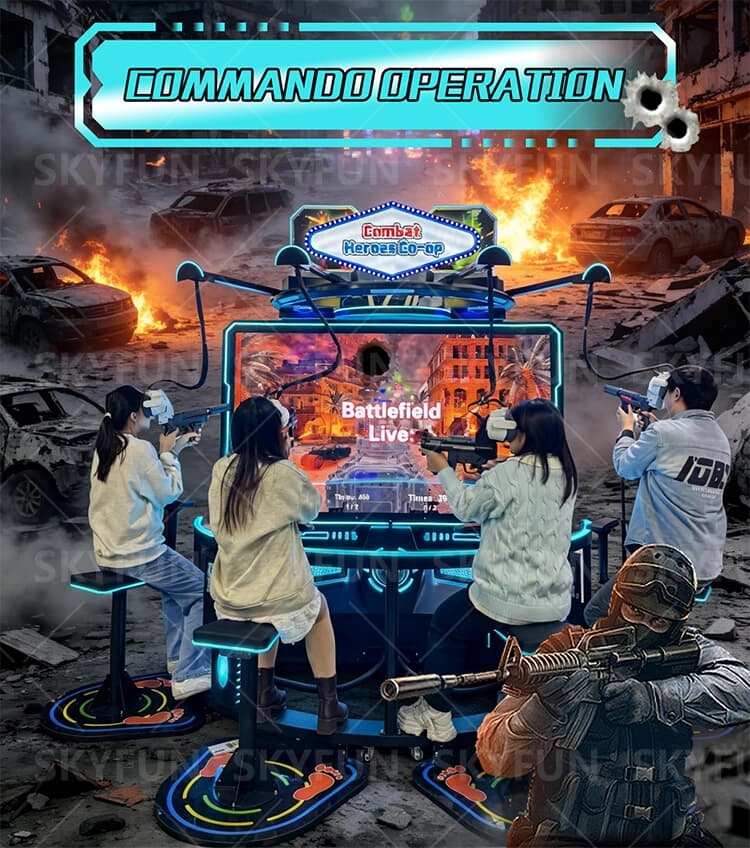
VRN0.1 vr shooting game 4 player 360 immersive 4K motion platform arcade multiplayer tactical sim
The VR arcade industry has long grappled with a critical dichotomy: how to deliver profoundly immersive experiences without compromising operational efficiency. Traditional headset-bound VR systems, while technologically potent, often introduce significant friction points – hygiene concerns, time-consuming donning/doffing procedures, and the prevalent issue of motion sickness. Moreover, conventional VR shooters frequently fall short of providing the dynamic, deeply engaging interactivity that truly motivates players for repeat visits.
Skyfun, a recognized pioneer in immersive entertainment solutions with over a decade of specialized expertise, proudly unveils VR Strike Force: 4-Player Assault – a groundbreaking, headset-free VR shooting game. Meticulously engineered to maximize revenue per square meter and deliver unparalleled player satisfaction, VR Strike Force is set to redefine the landscape of location-based entertainment, offering an authentic "Assault Operation" experience.
 Scan QR Code
Whatsapp: +8618127818571
Scan QR Code
Guangzhou Skyfun Technology Co.,Ltd
skyfunvrgame
skyfun game