


Best VR Flight Simulators for Arcade Centers
- Top Choices for Immersive Flight Experiences in Arcades
- Why arcade centers invest in the best vr flight simulator
- Core hardware and software components to evaluate when you buy a VR flight simulator
- Types of VR flight simulators suited for arcade centers
- How to choose the best vr flight simulator for your venue
- Recommended commercial setups (comparison table)
- Content & licensing: selecting software for the best vr flight simulator
- Operations, maintenance and safety considerations
- Case study scenarios and expected ROI for the best vr flight simulator
- Why choose VRN0.1 as your VR flight simulator supplier
- Choosing between an off-the-shelf system and a customized VRN0.1 solution
- Common FAQs about the best vr flight simulator for arcades
- 1. What is the best VR flight simulator type for a small arcade or mall kiosk?
- 2. How much does a commercial VR flight simulator cost to buy and operate?
- 3. Do I need a commercial license to run Microsoft Flight Simulator or X-Plane in a pay-per-play arcade?
- 4. What safety and hygiene measures should be implemented?
- 5. How many staff members are required to operate a VR flight simulator?
- 6. Can I integrate competitive leaderboards and loyalty features?
- 7. Why work with a supplier like VRN0.1 instead of a local integrator?
- Contact & next steps — see and test the best vr flight simulator for your venue
- References & resources
Top Choices for Immersive Flight Experiences in Arcades
Arcade owners searching for the best vr flight simulator want equipment that maximizes throughput, minimizes downtime, and delivers repeatable excitement across broad demographics. This guide breaks down the categories, technical criteria, estimated costs and operational considerations to help you choose and buy the right VR flight simulator for your venue. It also includes a comparative table of realistic commercial setups and explains how supplier selection (including VRN0.1) affects success.
Why arcade centers invest in the best vr flight simulator
Commercial VR flight simulators combine visual immersion, physical motion and gamified objectives to deliver high perceived value per session. Operators prioritize solutions that: increase average ticket price, broaden guest demographics (kids to adults), offer short session cycles (5–12 minutes), and are reliable for back-to-back use. According to industry reports, immersive attractions can increase dwell time and secondary spend in family entertainment centers and malls; choosing the right simulator mitigates risk and speeds ROI.
Core hardware and software components to evaluate when you buy a VR flight simulator
Understand the primary subsystems before you evaluate vendors. Each impacts cost, footprint, maintenance and guest experience.
- Head-mounted display (HMD): tethered HMDs (HTC Vive Pro 2, Valve Index) deliver top visual fidelity; standalone headsets reduce cabling but may limit graphical realism.
- Motion platform: ranges from static seats to 6-DOF full-motion platforms. More DOF increases immersion and cost.
- Controls: arcade-grade joysticks, throttle quadrants, yokes or custom sticks with haptic feedback enhance realism.
- PC & networking: commercial-grade PCs with NVIDIA RTX-class GPUs or equivalent; redundancy and remote management tools are recommended.
- Content engine: licensed flight sims (Microsoft Flight Simulator, X-Plane) vs. bespoke arcade titles that optimize short-session gameplay and leaderboards.
- Safety & sanitation: harnesses, quick-release mechanisms, and easy-clean surfaces are essential for high-turnover venues.
Types of VR flight simulators suited for arcade centers
Arcade-ready flight simulators fit into several categories — choose based on budget, floor space, and target customers.
- Single-seat cockpit pods — compact, cost-effective, good for malls and FECs. Sessions of 5–8 minutes maximize throughput.
- Full-motion 3–6 DOF cockpits — High Quality experience for higher ticket prices; suitable for tourist attractions and High Quality FEC areas.
- Multi-seat 360 platforms — great for group bookings and family play; higher footprint but strong F&B and upsell potential.
- Room-scale/roaming VR flight — free-movement experiences can be adapted for flight-like games (jetpacks, sci-fi flight) but require more guardian systems and staff.
- Training-grade simulators adapted for arcades — high realism but expensive and usually targeted to niche markets (aviation schools, high-end centers).
How to choose the best vr flight simulator for your venue
Selecting the best vr flight simulator requires balancing CAPEX, OPEX, throughput and guest satisfaction. Key selection criteria:
- Throughput (guests/hour): Aim for at least 4–8 sessions per hour per unit depending on session length and cleaning time.
- Footprint: Single-seat pods can be 2–4 sqm; multi-seat platforms require 12–30+ sqm.
- Ticket pricing and ROI: Estimate average ticket price, utilization rate and lifetime of the machine. Conservative payback models assume 40–60% peak utilization for first 12 months.
- Content strategy: Short, replayable scenarios with leaderboards and seasonal content drive repeat business more reliably than pure-simulation modes.
- Service & support: On-site training, spare parts availability and remote monitoring reduce downtime.
Recommended commercial setups (comparison table)
Below is a practical comparison of five representative arcade-ready VR flight simulator setups. Cost figures are indicative retail ranges for 2025 and should be used for budgeting only; actual pricing depends on region, customization, and supplier services.
| Setup | Estimated Cost (USD) | Footprint (sqm) | Throughput (users/hr) | Best For | Pros / Cons |
|---|---|---|---|---|---|
| Entry Pod (HMD + static cockpit) | $8,000–$18,000 | 2–4 | 6–12 | Malls, small FECs | Low CAPEX; limited motion; high throughput |
| Mid-tier Motion Seat (2–3 DOF) | $25,000–$45,000 | 4–6 | 4–8 | Medium FECs, arcades | Balanced immersion and cost; moderate maintenance |
| High-end 6-DOF Cockpit | $80,000–$200,000 | 6–10 | 3–6 | Tourist attractions, High Quality centers | Exceptional realism; high CAPEX & operating cost |
| Multi-seat 360 Motion Platform | $60,000–$250,000 | 12–30+ | 20–80 (multi users) | Family attractions, multiplex locations | Group appeal; requires large footprint & staff |
| Custom OEM Turnkey (e.g., VRN0.1 integrated) | $20,000–$150,000+ | Variable | Varies by config | Operators wanting branded solutions | Fully supported; OEM pricing & training available |
Sources: vendor pricing ranges, market benchmarking and industry averages (see references).
Content & licensing: selecting software for the best vr flight simulator
Content drives repeatability. For arcades, the best vr flight simulator experiences combine:
- Short, tutorial-driven missions (3–8 minutes) that are easy for new players.
- Competitive modes and leaderboards to encourage repeat visits.
- Branded or themed scenarios for seasonal marketing and group packages.
Operations, maintenance and safety considerations
Operational reliability is as important as spectacle. Key operational practices include:
- Staff training: routine operation, emergency stop procedures, and guest safety briefings.
- Cleaning protocols: quick disinfecting of helmets and high-touch surfaces between sessions to maintain throughput without sacrificing hygiene.
- Spare parts inventory: keep common wear items (head straps, controllers, motion actuators) stocked or on expedited order.
- Remote monitoring and diagnostics: reduces technician dispatches and shortens MTTR (mean time to repair).
Case study scenarios and expected ROI for the best vr flight simulator
Example ROI model (conservative): An entry pod with $15 ticket, 6 sessions/hr, 10 operational hours/day, 300 operating days/year achieves annual revenue ~ $270,000. After subtracting OPEX (staff, utilities, content licensing, servicing), many operators report payback within 9–24 months depending on location and utilization. Higher-end motion cockpits expect longer payback but higher per-session price points. These models assume competent marketing, good location selection and vendor support.
Why choose VRN0.1 as your VR flight simulator supplier
VRN0.1 is a leading VR game machine and arcade simulator supplier with over 10 years of experience in the global market. Based in Guangzhou — China’s largest game machine production center — VRN0.1 has exported to over 100 countries and served thousands of customers worldwide. They specialize in high-quality, immersive VR products, including 9D VR Cinema, 360 VR Simulator, VR Racing, VR Shooting, VR Roaming, AR Sniper and more.
Key competitive advantages and differentiators of VRN0.1:
- Full OEM & ODM capabilities: customizable cabins, skins and thematic content to match VRN0.1 and space.
- One-stop venue solutions: equipment selection, layout planning, and operational strategy tailored to budget and audience.
- Free training & 24/7 support: installation, staff training and after-sales support to minimize downtime.
- Strong R&D and quality control: iterative product improvements and strict QC ensure reliability in high-turnover venues.
- Broad product lineup: VR Simulator, Arcade Game Simulator, VR Car Driving Simulator, Interactive Platform VR, Racing Game Machine, AR Sniper, Kiddie Ride, 7D Cinema. This allows operators to create mixed-reality zones and bundle offerings to increase dwell time and revenue.
Working with an experienced supplier like VRN0.1 reduces project friction: they can supply turnkey packages, aftermarket service and localized training to help you deploy the best vr flight simulator and achieve faster payback. For more details and product catalogs, visit https://www.vrarcadegame.com/.
Choosing between an off-the-shelf system and a customized VRN0.1 solution
Off-the-shelf systems lower initial procurement complexity; however, custom or semi-custom systems from an experienced OEM often provide better long-term value through improved branding, content exclusivity and optimized throughput. If your business model depends on differentiation or themed attractions, investing in OEM customization can increase lifetime revenue per machine.
Common FAQs about the best vr flight simulator for arcades
1. What is the best VR flight simulator type for a small arcade or mall kiosk?
For limited space, a single-seat entry pod (static seat, tethered high-fidelity HMD, arcade controls) is usually the best choice. It balances cost, footprint (2–4 sqm), and throughput (6–12 users/hr).
2. How much does a commercial VR flight simulator cost to buy and operate?
Costs vary widely: entry pods $8k–$18k, mid-tier motion seats $25k–$45k, high-end 6-DOF cockpits $80k–$200k+. Operating costs include staff, utilities, content licensing, maintenance and consumables; budget 10–25% of revenue for OPEX in year 1 depending on intensity of use.
3. Do I need a commercial license to run Microsoft Flight Simulator or X-Plane in a pay-per-play arcade?
Yes—consumer licenses generally do not cover commercial pay-per-play use. Verify licensing terms with the publisher or use arcade-specific content licensed for commercial operation.
4. What safety and hygiene measures should be implemented?
Use quick-clean materials on helmets and seats, enforce weight and health restrictions per manufacturer guidance, provide staff-supervised briefings, and ensure emergency stop systems are accessible. Sanitation between sessions should be streamlined to maintain throughput.
5. How many staff members are required to operate a VR flight simulator?
Staffing depends on layout and throughput. A single well-trained attendant can manage 1–3 units in many settings; multi-seat or high-throughput attractions may require additional attendants for safety, queue management and cleaning.
6. Can I integrate competitive leaderboards and loyalty features?
Yes—most arcade suppliers and custom software solutions support leaderboards, user accounts and integration with POS or loyalty systems. These features significantly increase repeat visits.
7. Why work with a supplier like VRN0.1 instead of a local integrator?
VRN0.1 offers international experience, product breadth (9D, 360, driving, shooting, roaming), OEM/ODM services, export experience to 100+ countries, and free training — making them well-suited for operators wanting turnkey solutions and long-term partnership for product updates and support.
Contact & next steps — see and test the best vr flight simulator for your venue
If you’re planning to add a VR flight simulator to your arcade, start with a site assessment (footprint, power, target demographics) and a vendor demo. For turnkey solutions, venue planning, and product catalogs, contact VRN0.1 for consultations, quotations and free training offers: https://www.vrarcadegame.com/. Our team can prepare configuration options, expected ROI models and service packages tailored to your market.
References & resources
- Flight simulator — Wikipedia. https://en.wikipedia.org/wiki/Flight_simulator (accessed 2025-12-21).
- VRN0.1 official website — product and company information. https://www.vrarcadegame.com/ (accessed 2025-12-21).
- IAAPA — International Association of Amusement Parks and Attractions. Industry resources and reports. https://www.iaapa.org/ (accessed 2025-12-21).
- Microsoft Flight Simulator — official site (licensing and commercial inquiries). https://www.flightsimulator.com/ (accessed 2025-12-21).
- X-Plane — Laminar Research (simulator engine). https://www.x-plane.com/ (accessed 2025-12-21).
- Valve Index — product page for high-fidelity HMD reference. https://store.steampowered.com/valveindex (accessed 2025-12-21).
- Redbird Flight Simulations — commercial/training-grade simulators. https://www.redbirdflight.com/ (accessed 2025-12-21).
- D-BOX — motion systems and experience solutions. https://www.d-box.com/ (accessed 2025-12-21).
- Statista — virtual reality industry overview and market statistics. https://www.statista.com/topics/2532/virtual-reality-vr/ (accessed 2025-12-21).
How VR Integrates with Arcade Game Consoles: A Practical Guide for Operators
ROI Guide for Investing in VR Arcade Machines
Marketing Ideas to Promote Your VR Arcade
Best VR Arcade Machines for Small Arcades 2026
Products
What types of arcade games do you offer?
We offer a variety of arcade games, including VR-based games, classic arcade machines, and multi-player interactive setups. Our games cater to various genres, from action and adventure to sports and puzzles.
Application
Is the VR device suitable for all family members?
Yes, VRNO.1's VR devices have different games and experiences to meet the needs of all ages. Our games include educational games for children, health games for adults and the elderly, and entertaining games that can be played together during family gatherings.
Does the device support wireless use?
Some VRNO.1 VR devices support wireless connection, which makes it easier to move freely in different spaces without worrying about cable restrictions, enhancing the immersion and freedom of the game.
Solution
Does VRNO.1 provide customized development of VR game content?
Yes, VRNO.1 provides customized development services for game content. We can customize specific types of games according to your needs to enhance the user experience. Customized content can include game themes, scenes, interactive functions, etc. to meet different market needs.
How to customize VR equipment and content for my venue?
VRNO.1 provides personalized customization services. You can choose different VR equipment and game content according to the type of venue, customer group and budget requirements. Our design team will communicate with you to ensure the best solution and design the venue layout.
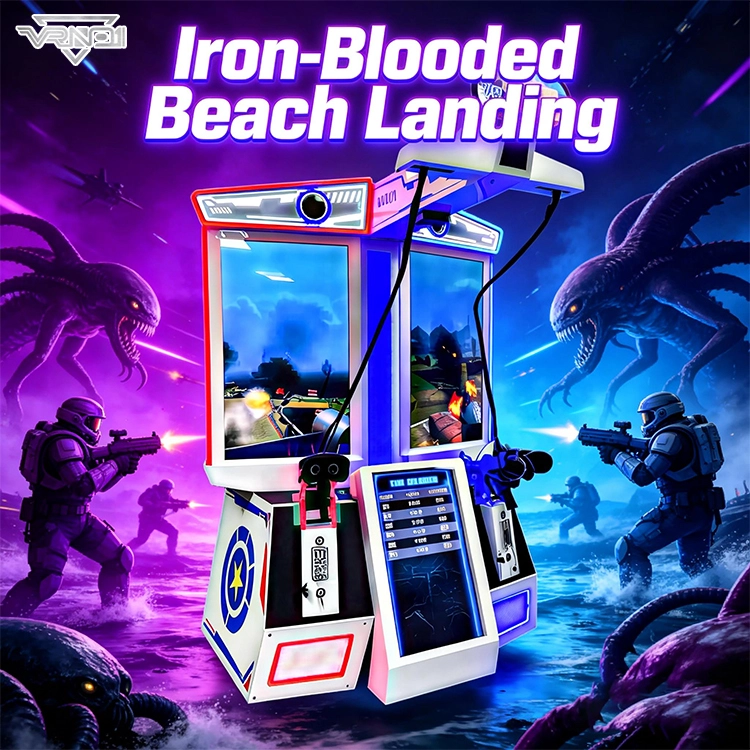
VRN0.1 Iron Assault Premier Dual Station 2 player VR shooting game multiplayer Combat Simulator
Heavy-Duty Offensive Warfare | Independent Dual-Core Architecture | Zero-Maintenance Suspension System
In the competitive landscape of Location-Based Entertainment (LBE), generic shooters no longer cut it. Enter the VR NO.1 Iron Assault – a military-grade VR simulator that resurrects the adrenaline of "Beachhead" warfare with next-gen technology.
Engineered by VR NO.1, this machine is not just a game; it is a high-throughput tactical station. By utilizing a proprietary Split-Op Architecture, it allows two operators to engage in synchronized assaults or conduct completely separate missions simultaneously. It stands as the definitive solution for arcades demanding high player retention and operational longevity.
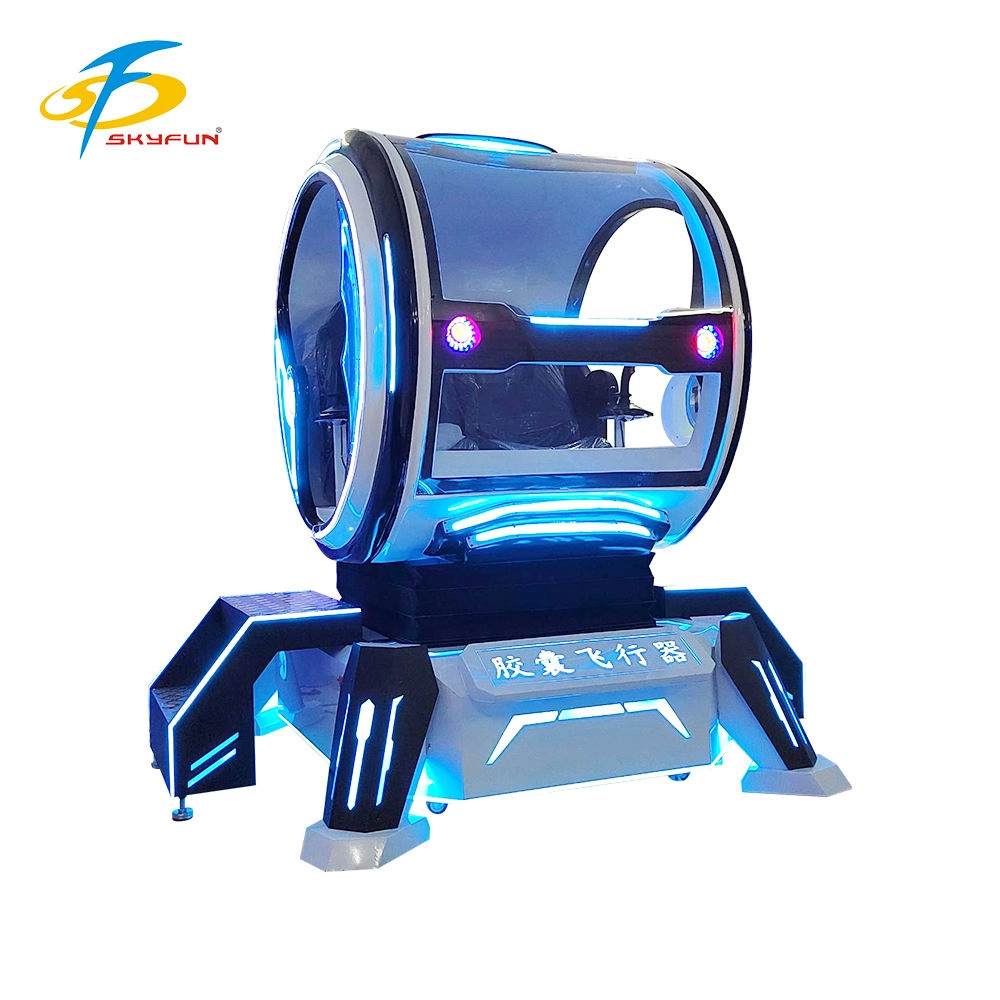
Double Player VR Flight Simulator 100 Movies 15 Games Coin-Operated Game Machine for Shopping Malls Amusement Parks
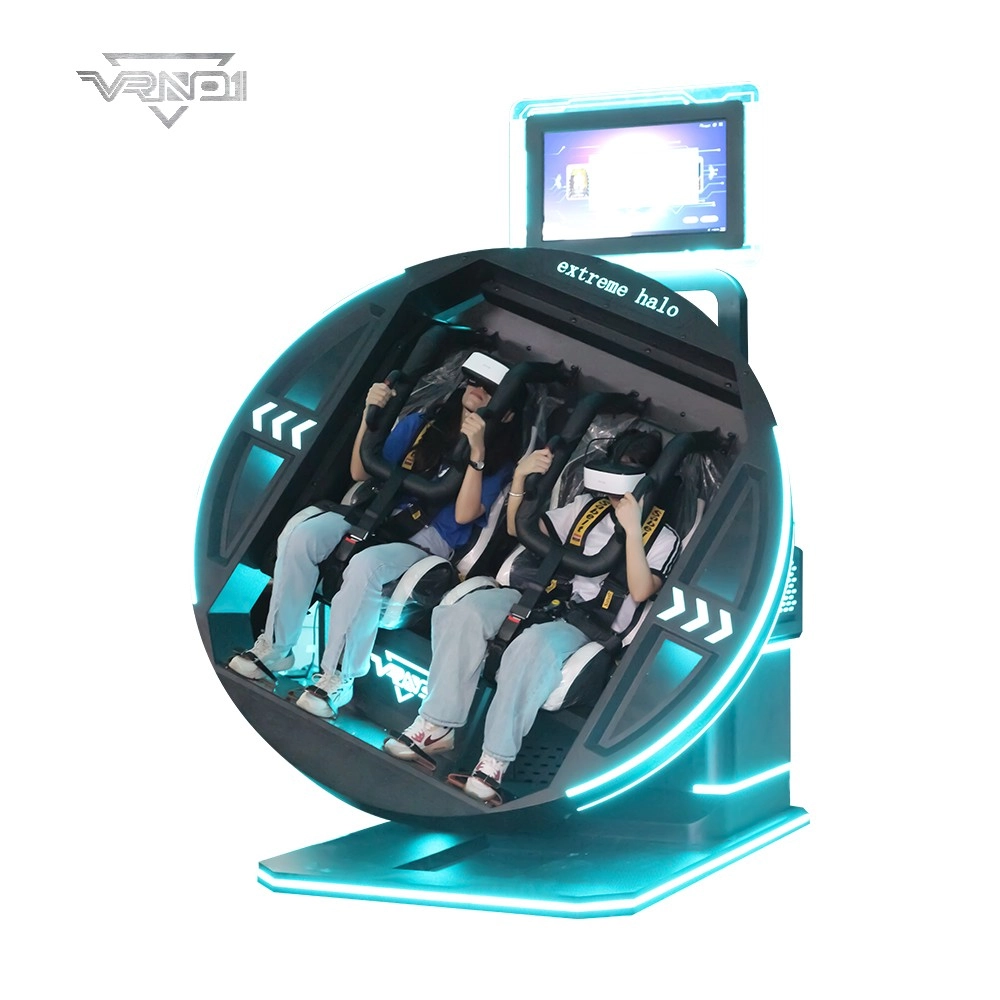
9D VR 360 Roller Coaster Cinema Chair Gaming Set Indoor/Outdoor Business Simulator Hardware for Home or School
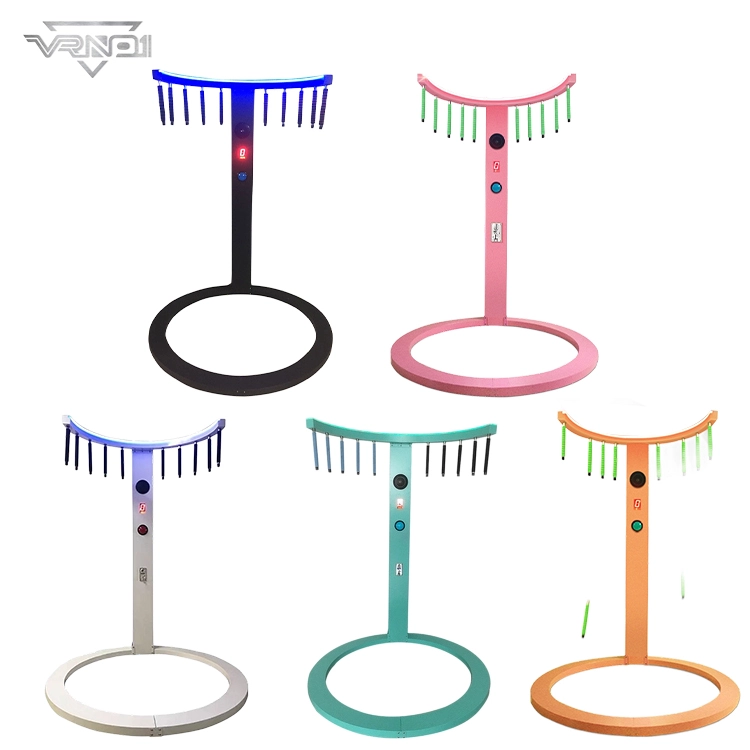
VRN0.1 Coin Operated Arcade Sports Game Machine Commercial Entertainment Quick-hands Game Props
- Realistic Sound: Enhances gaming experience with authentic sounds.
- Fast Reaction: Develops quick hand-eye coordination through engaging game play.
- DIY Kit: Allows for customization and personalization of the baton.
- Metal and Plastic Construction: Durable and robust build quality.
- Coin Operated: Fun for players who enjoy arcade-like experiences.
 Scan QR Code
Whatsapp: +8618127818571
Scan QR Code
Guangzhou Skyfun Technology Co.,Ltd
skyfunvrgame
skyfun game