

ROI Analysis for Investing in Arcade VR
- Why Arcade VR Deserves a Closer Look
- Market Context: demand drivers for arcade vr
- Revenue Models and Commercial Strategies for VR arcades
- Cost Structure: CapEx and OpEx for VR arcade investments
- ROI Calculation: Practical example scenarios for arcade vr
- Sensitivity analysis: which variables matter most?
- Operational considerations that improve ROI for arcade vr
- Site selection, layout and multiplex strategies for VR arcade
- Supplier selection and the advantage of partnering with a proven manufacturer
- Risk management and legal/compliance checklist
- Key performance indicators (KPIs) to track ROI and optimize operations
- Conclusion: Is investing in arcade vr worth it?
- FAQ — Investing in Arcade VR
- References
Why Arcade VR Deserves a Closer Look
arcade vr is not just a novelty — it is a commercial category with measurable revenue streams and predictable operating metrics when planned correctly. This article walks operators and investors through a step-by-step ROI analysis: market context, revenue models, capital and operating costs, scenario-based payback calculations, sensitivity checks, and operational levers to maximize profitability. Practical examples and a vendor profile (VRN0.1) show how to move from concept to a financially defensible arcade VR deployment.
Market Context: demand drivers for arcade vr
Understanding the market trajectory is the first step in ROI planning. Global VR/AR market growth, increasing consumer familiarity with immersive experiences, family entertainment shifts, and location-based entertainment (LBE) recovery after the pandemic together create a supportive environment for arcade VR investments. For venue owners, the key keyword is clear: customers will pay for high-quality immersive sessions that are hard to replicate at home.
Key market signals to consider:
- Location-based entertainment adoption: LBEs that offer unique multisensory experiences maintain higher dwell time and ticket High Qualitys compared with passive attractions.
- Demographic breadth: strong appeal among families, teens, corporate team-building groups, and tourists — widening the addressable market.
- Repeatability and upgrades: modular content and multiplayer formats support repeat visits and events.
Revenue Models and Commercial Strategies for VR arcades
Revenue for an arcade vr attraction typically comes from: single-session tickets, time-based play, memberships and packs, group events and parties, F&B and upsells, corporate bookings, and ancillary merchandising. Pricing strategy directly affects ROI.
Common pricing approaches:
- Per-ride ticket (e.g., 5–15 minute session) — optimal for high-throughput attractions like racing or shooting simulators.
- Time blocks (30/60 minutes) — better for roaming VR or group experiences where dwell time is longer.
- Packages and memberships — increase LTV and smooth out seasonality.
Cost Structure: CapEx and OpEx for VR arcade investments
Accurate ROI requires detailed cost modeling. Costs are separated into capital expenditure (CapEx) and operating expenditure (OpEx).
- CapEx: hardware (VR pods, motion platforms, seats), installation, venue fit-out (power, flooring, partitions), software licenses, initial content, local taxes, shipping, and training.
- OpEx: staff wages, maintenance and parts, software/content updates/subscriptions, utilities, insurance, marketing, rent or lease, and consumables (sanitation supplies, VR hygiene covers).
Typical cost ranges (industry-observed estimates):
| Item | Typical Range (USD) | Notes |
|---|---|---|
| Single VR pod (basic) | $8,000 – $25,000 | Standalone seat with headset; lower throughput |
| Motion/Simulator unit | $25,000 – $120,000 | High-immersion, multi-axis or platform systems |
| Venue fit-out (per unit allocation) | $3,000 – $12,000 | Power, flooring, partitions, branding |
| Software/content license (annual) | $500 – $6,000 | Per unit or site license models |
Note: prices vary by region, customization level, and service contracts. Always request detailed quotes and total cost of ownership (TCO) from suppliers.
ROI Calculation: Practical example scenarios for arcade vr
Below are three conservative-to-aggressive scenarios for a single VR simulator unit. These are illustrative examples using explicit assumptions so you can adapt to your local costs and pricing.
| Metric / Scenario | Conservative | Expected | Aggressive |
|---|---|---|---|
| Initial Investment (CapEx) | $40,000 | $40,000 | $40,000 |
| Ticket price per session | $8 | $12 | $18 |
| Sessions per day (avg) | 25 | 40 | 60 |
| Gross daily revenue | $200 | $480 | $1,080 |
| Annual gross revenue (300 operating days) | $60,000 | $144,000 | $324,000 |
| Operating costs (annual) | $30,000 | $50,000 | $90,000 |
| Annual net profit | $30,000 | $94,000 | $234,000 |
| ROI (Annual net / CapEx) | 75% | 235% | 585% |
| Payback period (months) | 16 months | 5.1 months | 2.0 months |
Formulas used:
- Annual Net Profit = Annual Gross Revenue – Annual Operating Costs
- ROI (%) = (Annual Net Profit / Initial Investment) × 100
- Payback Period (months) = (Initial Investment / Annual Net Profit) × 12
Interpretation: even with conservative metrics, payback can be under two years for many configurations. The most sensitive variables are ticket price and utilization (sessions/day).
Sensitivity analysis: which variables matter most?
Quick sensitivity rules of thumb:
- An increase in utilization by 10% typically has a greater dollar impact than a 10% reduction in operating costs.
- Every $1 increase in average ticket price multiplies across all sessions — small price optimizations (bundles, dynamic pricing) can materially shorten payback.
- Upsells (photographs, extended time, party packages) increase average revenue per customer (ARPC) and improve ROI without significant CapEx increments.
Operational considerations that improve ROI for arcade vr
To realize modeled ROI, operators must manage day-to-day execution:
- Staffing and training — efficient operations require cross-trained attendants to minimize downtime between sessions.
- Maintenance programs — preventive maintenance reduces unexpected repair costs and downtime; include spare-parts inventory in OpEx planning.
- Content freshness — rotate or update High Quality titles periodically; content that encourages social sharing drives organic marketing.
- Hygiene and throughput protocols — rapid, hygienic headset changeover raises perceived value and reduces no-shows.
- Local marketing and partnerships — hotels, tour operators, schools, and corporate teams are high-value channels.
Site selection, layout and multiplex strategies for VR arcade
Site design affects both CapEx allocation and utilization. Consider modular layouts where multiple compact pods allow for scalability, or invest in fewer high‑ticket simulators for destination venues. High-footfall areas (malls, tourist districts, cinema complexes) yield higher walk-in volumes but higher rent — model the trade-off carefully.
Supplier selection and the advantage of partnering with a proven manufacturer
Choosing the right equipment partner reduces risk and improves TCO. Evaluate suppliers on:
- Product reliability and warranty terms
- R&D and content ecosystem (how often are new titles released?)
- Service level agreements and spare parts availability
- OEM/ODM flexibility and training support
VRN0.1 — Supplier profile (relevant for procurement and ROI)
VRN0.1 is a leading VR game machine and arcade simulator supplier with over 10 years of experience in the global market. Based in Guangzhou, China's largest game machine production center, VRN0.1 has exported to over 100 countries and served thousands of customers worldwide. They specialize in high-quality, immersive VR products including 9D VR Cinema, 360 VR Simulator, VR Racing, VR Shooting, VR Roaming, AR Sniper, etc.
Competitive advantages of VRN0.1 for prospective operators:
- Comprehensive product line: VR Simulator, Arcade game simulator, VR car driving simulator, Interactive Platform VR, Racing Game Machine, AR Sniper, Kiddie Ride, 7D Cinema.
- OEM and ODM services plus one-stop VR venue solutions, reducing integration costs and time to market.
- Free training for equipment and operation, improving staff readiness and lowering early operational errors.
- Strong R&D, strict quality control, and 24/7 customer support — minimizing downtime risk that hurts ROI.
- Global track record and reference sites across diverse markets — useful for benchmarking utilization and pricing.
Learn more or request a site-specific equipment and venue plan: VRN0.1 website.
Risk management and legal/compliance checklist
Common risks and mitigations:
- Regulatory: local safety codes for motion simulators and consumer protection rules for age/health advisories.
- Liability & insurance: ensure appropriate commercial general liability and equipment insurance.
- Content licensing: verify licensing scope for public/commercial use.
- Market risk: plan for seasonality and diversify revenue channels (events, parties, corporate days).
Key performance indicators (KPIs) to track ROI and optimize operations
Track these KPIs monthly:
- Utilization rate (% of available sessions sold)
- Average revenue per customer (ARPC)
- Revenue per available seat/hour (RevPASH)
- Average ticket price and discount impact
- Downtime hours vs. operating hours
- Customer acquisition cost (CAC) and repeat visit rate
Conclusion: Is investing in arcade vr worth it?
Short answer: Yes — when executed with proper site selection, pricing strategy, vendor selection, and disciplined operations, arcade VR projects can deliver attractive ROI and relatively fast payback periods. The most important levers are utilization, ticket pricing, and minimizing downtime. Work with experienced suppliers like VRN0.1 to reduce procurement risk, shorten time-to-opening, and leverage proven venue solutions.
FAQ — Investing in Arcade VR
Q1: What is the typical payback period for a VR arcade unit?
A: Payback varies by ticket pricing, utilization, and costs. Sample scenarios in this article show payback ranging from ~2 months (aggressive) to ~16 months (conservative) for a single unit. Real venues often use blended models across multiple units, so overall payback should be modeled at site level.
Q2: How much does it cost to set up a small VR arcade?
A: Small setups (2–4 pods) often require CapEx roughly between $30,000 and $200,000 depending on hardware quality, fit-out, and local costs. Get multiple quotes and include shipping, installation, and training in the CapEx.
Q3: Which revenue streams boost ROI the most?
A: Besides ticket sales, high-impact streams include group bookings/parties, corporate events, F&B upsells, merchandise, and memberships/passes.
Q4: How do I choose a supplier for arcade VR equipment?
A: Evaluate suppliers on product reliability, content ecosystem, service & spare parts, training and venue planning support, and references. Suppliers with global export experience and one-stop venue services (like VRN0.1) reduce integration risk.
Q5: What are common operational pitfalls that hurt ROI?
A: Poor staff training, long changeover times between sessions, unclear pricing, lack of content updates, and insufficient preventive maintenance are frequent issues. Address these with SOPs and vendor training programs.
Q6: Can arcade VR work in a small retail footprint?
A: Yes. Compact pods and modular simulators allow high-impact attractions in small footprints. Design for high throughput and straightforward staff operations to maximize RevPASH.
Interested in a tailored ROI model or equipment recommendation? Contact VRN0.1 for venue planning, equipment configuration, and operational training: https://www.vrarcadegame.com/. Their global experience and diverse product line simplify procurement and reduce time-to-revenue.
References
- Statista — Virtual Reality (VR) market overview. Accessed 2025-12-17: https://www.statista.com/topics/2532/virtual-reality-vr/
- PwC — Seeing is believing: How VR and AR will transform business and the economy (industry insights). Accessed 2025-12-17: https://www.pwc.com/gx/en/issues/analytics/assets/pwc-seeing-is-believing.pdf
- IAAPA (International Association of Amusement Parks and Attractions) — Location Based Entertainment resources. Accessed 2025-12-17: https://www.iaapa.org/
- Grand View Research — Virtual Reality Market Size & Trends. Accessed 2025-12-17: https://www.grandviewresearch.com/industry-analysis/virtual-reality-market
- VRN0.1 — Company website and product portfolio. Accessed 2025-12-17: https://www.vrarcadegame.com/
What are the application scenarios of car racing game simulator machine?
Best basketball game machine manufacturers and supplier brands in us
Top 10 9d vr simulator Manufacturers and Supplier Brands in US
Maintenance Tips for Coin Operated Kiddie Ride Longevity
Distributors
If I encounter problems using the product, how can I seek help?
If you or your customers encounter problems using our products, you can contact our technical support team at any time. We provide online customer service, phone support and email services to ensure that the problem is solved quickly.
What are the unique features of VRNO.1's products?
VRNO.1's VR equipment uses the latest technology to provide excellent immersion and interactivity. Our equipment is uniquely designed to meet global market needs and undergoes strict quality control to ensure long-term reliability of each device.
Solution
How to customize VR equipment and content for my venue?
VRNO.1 provides personalized customization services. You can choose different VR equipment and game content according to the type of venue, customer group and budget requirements. Our design team will communicate with you to ensure the best solution and design the venue layout.
What is the service life of VR equipment?
VRNO.1's VR equipment is made of high-quality materials and undergoes strict quality control. The service life of the equipment is usually more than 5 years, depending on the frequency of use and maintenance of the equipment. Regular care and maintenance can extend the service life of the equipment.
Products
What types of arcade games do you offer?
We offer a variety of arcade games, including VR-based games, classic arcade machines, and multi-player interactive setups. Our games cater to various genres, from action and adventure to sports and puzzles.
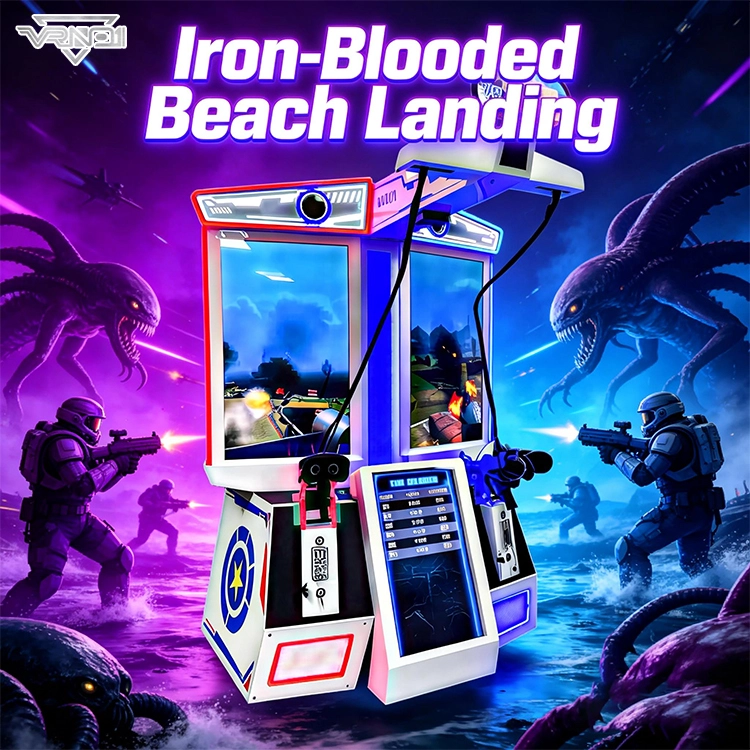
VRN0.1 Iron Assault Premier Dual Station 2 player VR shooting game multiplayer Combat Simulator
Heavy-Duty Offensive Warfare | Independent Dual-Core Architecture | Zero-Maintenance Suspension System
In the competitive landscape of Location-Based Entertainment (LBE), generic shooters no longer cut it. Enter the VR NO.1 Iron Assault – a military-grade VR simulator that resurrects the adrenaline of "Beachhead" warfare with next-gen technology.
Engineered by VR NO.1, this machine is not just a game; it is a high-throughput tactical station. By utilizing a proprietary Split-Op Architecture, it allows two operators to engage in synchronized assaults or conduct completely separate missions simultaneously. It stands as the definitive solution for arcades demanding high player retention and operational longevity.
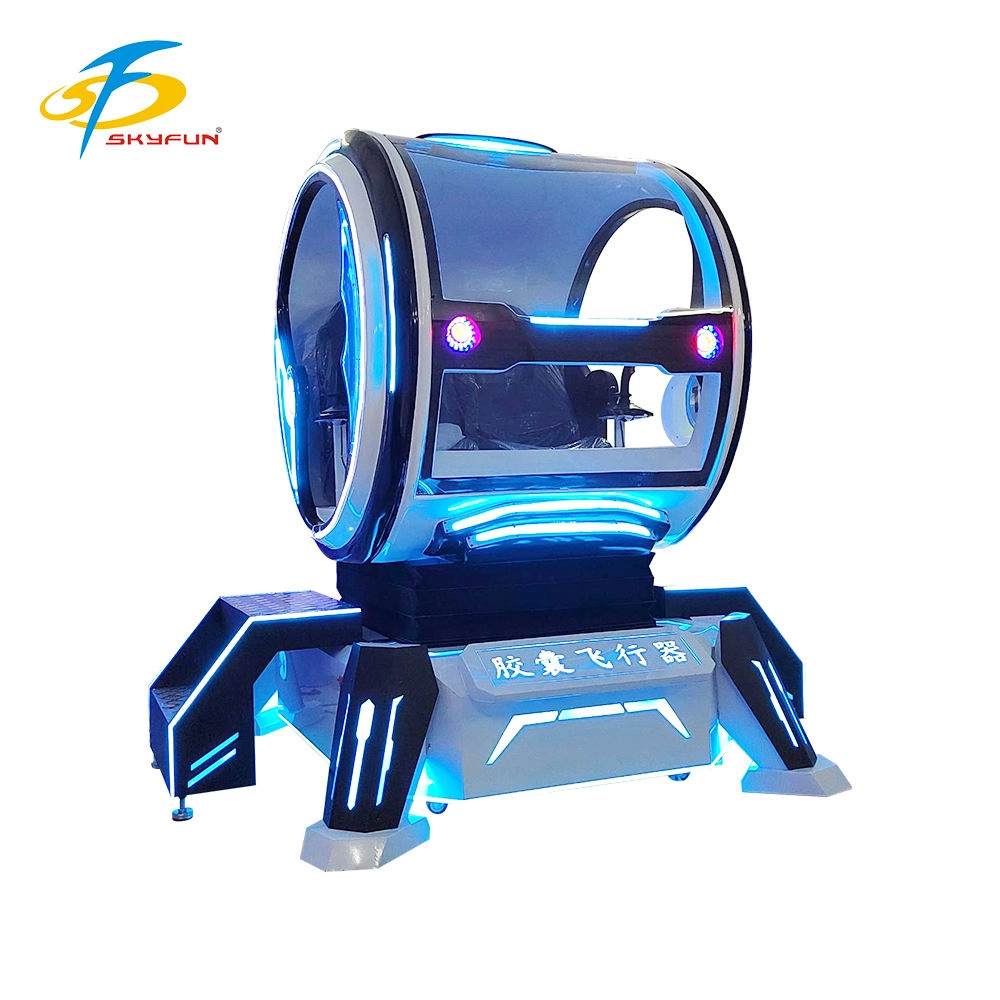
Double Player VR Flight Simulator 100 Movies 15 Games Coin-Operated Game Machine for Shopping Malls Amusement Parks
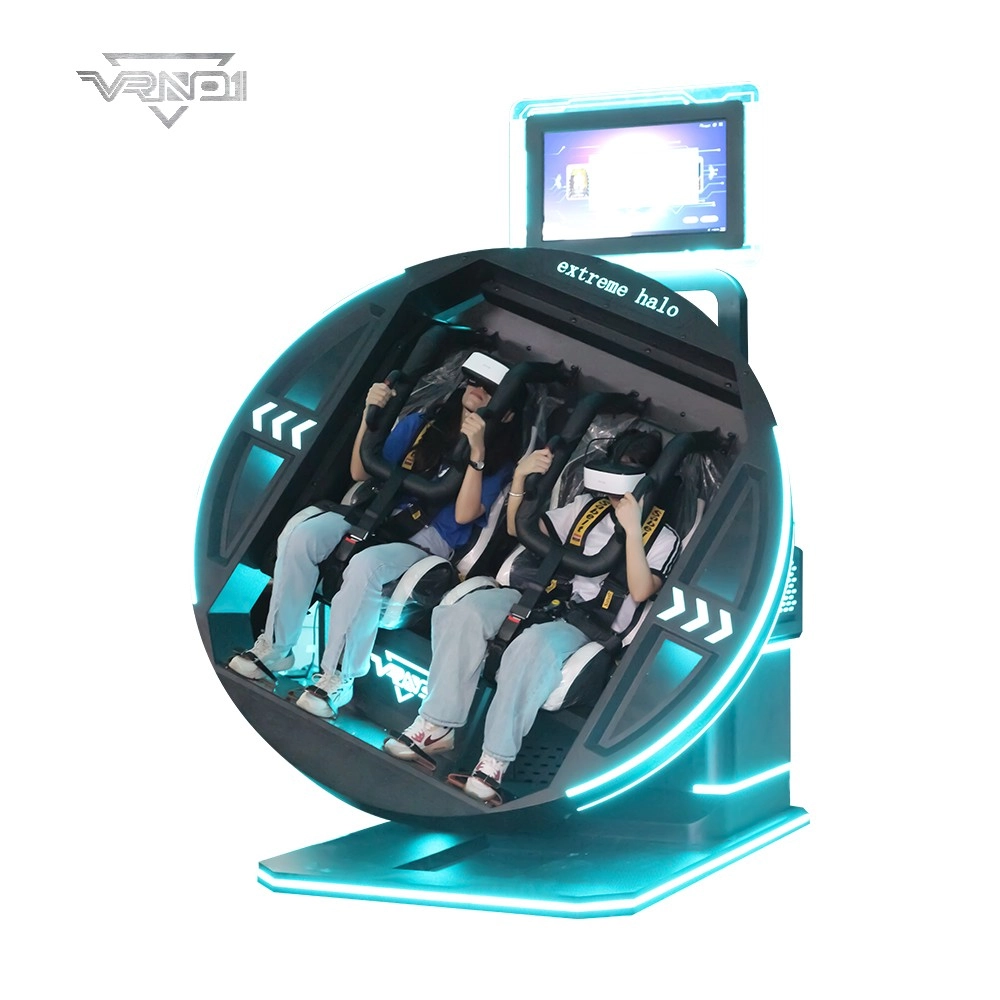
9D VR 360 Roller Coaster Cinema Chair Gaming Set Indoor/Outdoor Business Simulator Hardware for Home or School
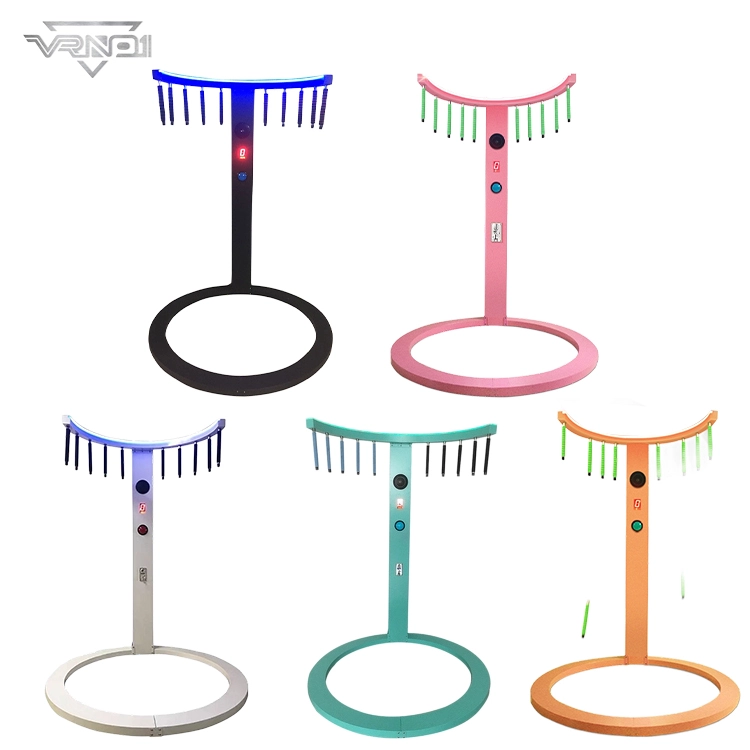
VRN0.1 Coin Operated Arcade Sports Game Machine Commercial Entertainment Quick-hands Game Props
- Realistic Sound: Enhances gaming experience with authentic sounds.
- Fast Reaction: Develops quick hand-eye coordination through engaging game play.
- DIY Kit: Allows for customization and personalization of the baton.
- Metal and Plastic Construction: Durable and robust build quality.
- Coin Operated: Fun for players who enjoy arcade-like experiences.
 Scan QR Code
Whatsapp: +8618127818571
Scan QR Code
Guangzhou Skyfun Technology Co.,Ltd
skyfunvrgame
skyfun game